
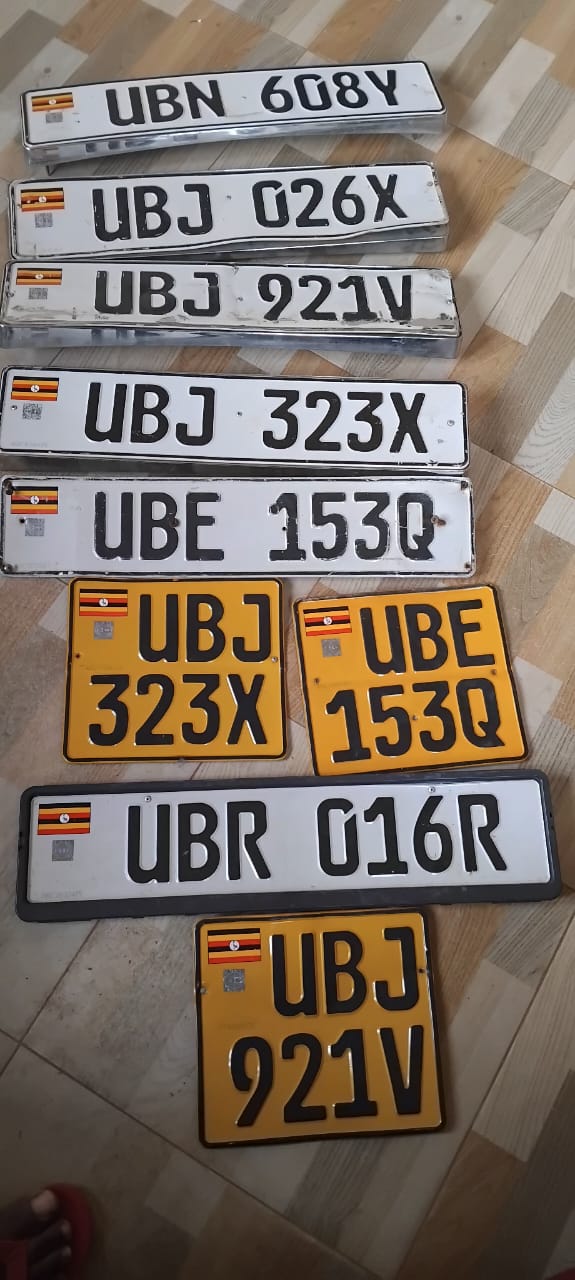
Uganda's transition to digital number plates is increasingly becoming an economic bottleneck, with months-long delays in issuing registration plates leaving thousands of vehicles and motorcycles stranded, disrupting businesses, delaying deliveries and locking up billions of shillings in government revenue.
Vehicle dealers, importers and clearing agents say the persistent delays have slowed business operations, tied up working capital and left customers waiting indefinitely despite having paid all the required registration fees.
At Kainu Investments, more than 200 tricycles remain parked in the company's yard awaiting digital number plates. Of these, 100 have already been fully paid for by customers but cannot be handed over because the registration process has not been completed.
"We have customers who have fully paid for their tricycles, but we cannot deliver them because they have no number plates. Every unit parked here is capital tied down. It affects our cash flow, increases storage costs and damages customer confidence," said Bakyayita Mark David, the company's Inventory Manager.
He attributed the delays to persistent technical challenges within the Intelligent Transport Monitoring System (ITMS), saying the bottlenecks have significantly slowed the registration process and affected the company's operations.
The challenges facing Kainu Investments reflect a broader concern across Uganda's vehicle importation and clearing industry.
The Uganda Clearing Industry and Forwarding Association (UCIFA) says the delays have evolved from an administrative inconvenience into a wider economic challenge affecting businesses, motorists and government revenue.
According to UCIFA Deputy Executive Director Bwire Kezekiah, more than 47,000 motorists who applied for replacement digital number plates after losing, damaging or wearing out their old plates have waited for months—and in some cases more than a year—despite paying the prescribed fees.
"More than 47,000 motorists have already paid for replacement number plates but continue waiting for months, and in some cases over a year, to receive them," Bwire said.
The association estimates that government has already collected approximately Shs7.5 billion in replacement plate fees while thousands of applicants remain without the service they paid for.
UCIFA also says the delays have left more than 3,000 brand-new motorcycles stranded in bonded warehouses despite taxes and registration fees having already been paid.
According to the association, the delays mean boda boda riders cannot begin earning an income, importers continue servicing bank loans on idle stock and businesses remain burdened with inventory that cannot be sold or delivered.
"The delays are affecting the entire supply chain. Businesses are servicing loans on vehicles that cannot be released, while government is also missing out on revenue generated through registrations and related services," Bwire added.
The concerns come just days after Works and Transport Minister Fred Byamukama visited the factory producing Uganda's digital number plates to assess its production capacity and review the growing backlog.
While government has expressed confidence that production will improve, clearing agents argue that current output remains well below market demand.
UCIFA is now calling on the digital number plate manufacturer to subcontract part of the production and installation process to increase capacity and accelerate deliveries.
The association estimates that the delays are costing government about Shs4 billion every week in non-tax revenue from delayed vehicle registrations, ownership transfers, amendments, penalties and other transport-related services.
According to UCIFA, the cumulative revenue loss has reached approximately Shs109.6 billion, underscoring the growing economic cost of the registration backlog.
Uganda has an estimated 2.1 million registered vehicles, the majority of which are yet to transition to the digital number plate system.
Industry stakeholders warn that unless production capacity is significantly expanded and the registration backlog is cleared, the delays will continue to constrain business activity, frustrate motorists, slow economic activity and deny government much-needed revenue.
